
Nightstand Buying Guide: The Right Height, Size, Storage and Style
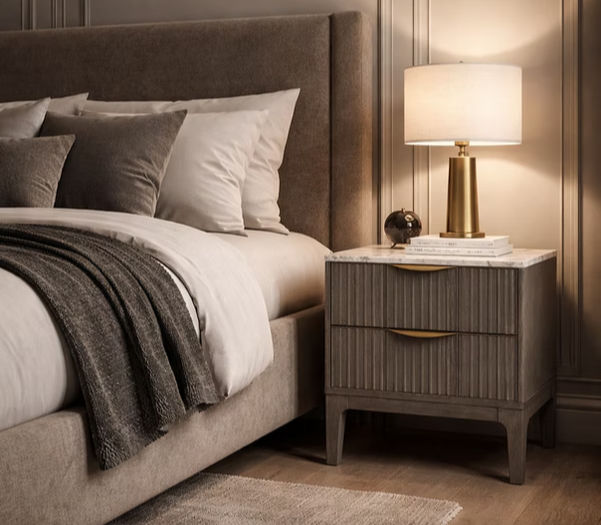
A nightstand may be one of the smaller pieces in a bedroom, but getting its proportions wrong can affect both comfort and the overall balance of the room. A nightstand that sits too low can be awkward to reach from bed, while one that is too tall or wide can make the room feel crowded.
The right choice depends on your bed and mattress height, available floor space, storage needs and how you use the bedside area. Our Nightstands collection includes compact, wide, open, drawer-based and Canadian-made options, so it helps to start with measurements rather than style alone.
How Tall Should a Nightstand Be?
As a practical starting point, the top of the nightstand should generally sit close to the height of the top of your mattress. Keeping the two surfaces relatively level makes it easier to reach a lamp, phone, book or glass of water while you are in bed.
It does not need to be perfectly flush with the mattress. A small difference can work well, but a large height mismatch is more likely to feel awkward. Measure from the floor to the top of your mattress after the mattress is installed on the actual bed frame, since frame height and mattress thickness both affect the result.
A Simple Nightstand Height Guide
Your Measurement | What to Look For |
Floor to top of mattress | Use this as the primary reference point for nightstand height. |
Nightstand slightly lower than mattress | Usually comfortable when the difference is modest and the surface remains easy to reach. |
Nightstand approximately level with mattress | A balanced, practical arrangement for most bedrooms. |
Nightstand substantially above mattress | Check reach and visual proportion carefully before choosing. |
Choose the Width According to the Bed and the Room
Nightstand width should feel proportional to the bed without blocking circulation. A larger bed and broad headboard can visually support wider nightstands, while a compact bedroom may benefit from narrower pieces.
Before buying, measure the space between the bed and the nearest wall, dresser, doorway or closet. Leave enough room to make the bed and move comfortably around it. If you are using two nightstands, check that the complete arrangement remains centred and balanced on the wall.
Do Not Overlook Depth
Depth matters in smaller rooms because a nightstand that projects too far can narrow the walkway beside the bed. It can also interfere with drawers, closet doors or other furniture.
Think about what actually needs to fit on the surface. A bedside lamp, phone and book require much less depth than a large decorative lamp, charging station and several accessories. Buying only the surface area you need can preserve valuable circulation space.
Decide How Much Bedside Storage You Really Need
Some people need little more than a surface for a lamp and phone. Others want drawers for medication, reading material, chargers and personal items. Choosing the right storage configuration helps keep the bedroom visually calm without adding unnecessary bulk.
A single drawer with an open shelf can keep frequently used items accessible, while two or three drawers provide more concealed storage. In a small bedroom, a nightstand with useful drawers can reduce the need for additional storage furniture.
Some Products to Consider
The Caldora Nightstand is a useful example when you want substantial storage in a relatively compact footprint. Our catalogue lists a cylindrical oak-veneer frame with three soft-closing drawers and a polished marble top. At approximately 21.75 inches high, it is especially important to compare its height with your finished mattress height before deciding whether the proportions are right for your bed.
The Keldon Nightstand provides a different combination of materials and proportions. Our catalogue lists it at 23.5 inches wide, 18.5 inches deep and 23.5 inches high, with a marble top, reeded rubberwood drawers and slim metal handles. Its dimensions make it a practical example of why width, depth and height should all be considered together rather than judging a nightstand from height alone.
Canadian-Made and Custom-Sized Options
If standard dimensions do not work well with your bed or room, selected Canadian-made nightstands in our collection provide additional flexibility.
For example, the Eve Nightstand is proudly designed and handcrafted in Canada and, according to our catalogue, is available in a 24-inch by 18-inch by 27-inch configuration with custom sizing also available.
The Sula Nightstand is another Canadian-made option with custom sizing available. This can be valuable when a specific mattress height, headboard width or narrow floor plan makes standard proportions difficult.
Match the Nightstand to the Bed Without Making Everything Identical
Your nightstands do not have to come from the same collection as the bed. A coordinated bedroom often looks more natural when pieces relate through material, finish, colour or shape without matching exactly.
For example, a wood bed can be paired with a nightstand that repeats a similar wood tone but introduces stone or metal. An upholstered bed can work well with a clean wood nightstand that provides contrast. Look for one or two visual connections rather than trying to duplicate every finish.
If you are choosing both pieces together, compare our Beds collection alongside the nightstands so you can judge the complete proportions.
Plan for Your Bedside Lamp
The nightstand and lamp should be considered as a pair. A very large lamp can overwhelm a narrow table, while a small lamp may feel underscaled beside a wide nightstand and tall headboard.
Make sure the lamp base leaves enough usable surface for the items you keep beside the bed. Also consider the combined height of the nightstand and lamp so the light source is useful when you are reading or relaxing in bed.
Think About Charging and Cable Management
Phones, watches, tablets and other devices have made access to power an important bedside consideration. Before choosing a nightstand, check the location of wall outlets and think about where charging cables will run.
A beautiful bedside arrangement can quickly feel cluttered when cords cross the surface or stretch across a walkway. The furniture does not necessarily need built-in charging, but it should allow you to create a practical setup.
One Nightstand or Two?
Two nightstands create symmetry and give both sleepers dedicated storage, but they are not mandatory. In a smaller bedroom, one nightstand may preserve circulation or allow room for a dresser or other essential furniture.
If two different-sized bedside areas require different solutions, the nightstands do not necessarily have to be identical. Maintaining a related finish, shape or visual weight can still make the room feel intentional.
Nightstand Buying Checklist
Measure from the floor to the top of your installed mattress.
Compare nightstand height with the finished mattress height.
Measure available width between the bed and surrounding walls or furniture.
Check nightstand depth against your walking space.
Decide whether you need open storage, drawers or both.
Allow enough surface area for your lamp and everyday bedside items.
Consider outlet location and charging cables.
Coordinate the nightstand with the bed rather than matching automatically.
Explore custom sizing when standard dimensions do not fit properly.
Check drawer clearance and room circulation before ordering.
Frequently Asked Questions About Nightstands
How tall should a nightstand be?
A useful starting point is to choose a nightstand with a top surface close to the height of the top of your mattress. Measure the finished bed with the mattress installed, then compare that measurement with the nightstand height.
Should a nightstand be higher or lower than the bed?
A modest difference is usually fine. The priority is that the surface is comfortable to reach from bed and looks proportional beside the mattress and headboard.
How wide should a nightstand be?
There is no single ideal width. It should provide enough surface and storage for your needs while fitting comfortably between the bed and surrounding walls, doors or furniture.
Do nightstands have to match the bed?
No. Coordinating through wood tone, colour, material or design language can create a cohesive bedroom without using a matching set.
Are two nightstands necessary?
No. Two can provide symmetry and individual storage, but one may be more practical in a small bedroom. Function and available space should determine the arrangement.
Find the Right Nightstand for Your Bedroom
The best nightstand is not simply the one that looks best in isolation. It should sit comfortably beside your mattress, provide the storage and surface area you need, and leave enough room for the bedroom to function naturally.
Ready to find the right nightstand for your space? Explore our collection of contemporary nightstands online, or visit our Ottawa furniture showroom to compare sizes, materials and storage options in person and get expert guidance from our team.
